
When the prospective buyers are negotiating for the price reduction during the property viewings, some of the estate agents, as a counterargument, are “recommending” taking a mortgage with longer maturity. This is a recipe for lifetime misery: high-interest rates, large debt and long maturity. Don’t take the poison pill.
Fool me once…
First things first. The real estate agents are neither in a position nor competent enough to recommend financial decisions for the buyers.
They are instructed by the sellers to sell or rent their properties and are rewarded as a percentage of the eventual price achieved. They are not contractually liable to the buyers.
Secondly, a significant number of the real estate agents in Jersey are simply incompetent in the basic finance fundamentals, including real estate valuation. None real estate background of many of them are at best in sales. For example, car sales.
If you want to act on a salesman’s recommendation serving the interests of your counterparty in a zero-sum game, then… Full you once, shame on you.
Poison pill
But in essence, what does the recommendation of taking a long-term maturity mortgage mean? The quick answer is misery, but it has three parts.
Mortgage amount: The property prices, despite the declines at the negotiation table, have not yet adjusted to the financing conditions. This is partly led driven by the thinking that “high-interest rates are temporary” (perhaps from the creators of “the inflation is transitory” headline of the last year”) and partly led by the aggressive and unethical marketing of the properties (like overpriced listings).
If a buyer agrees to purchase a property near the listing or even at a slightly discounted price, the mortgage amount is expected to be at high levels, meaning high repayments in the future.
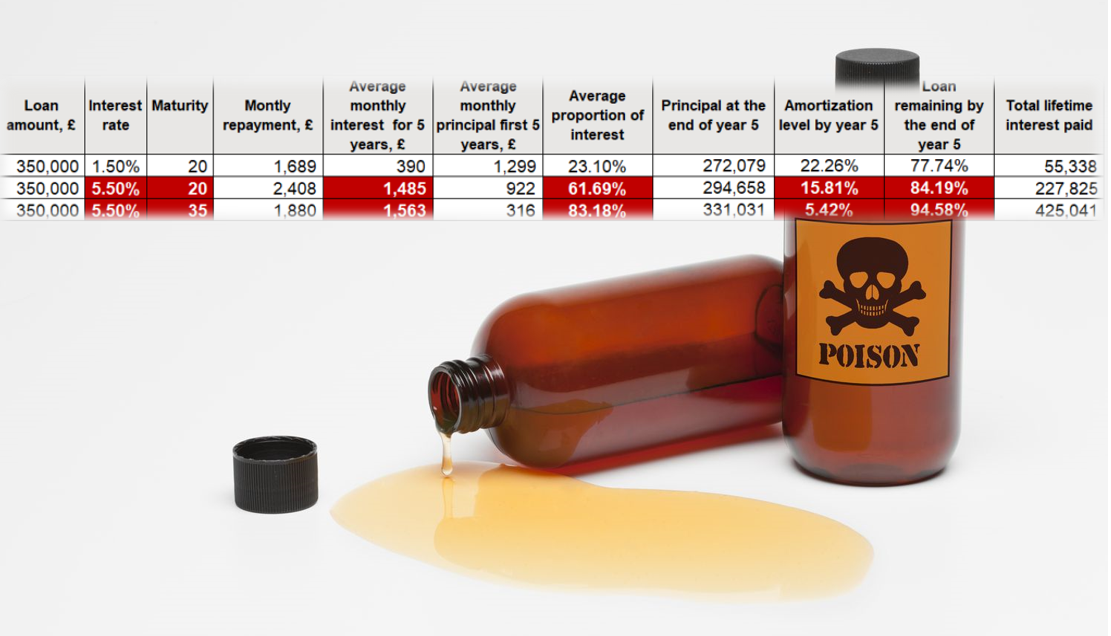
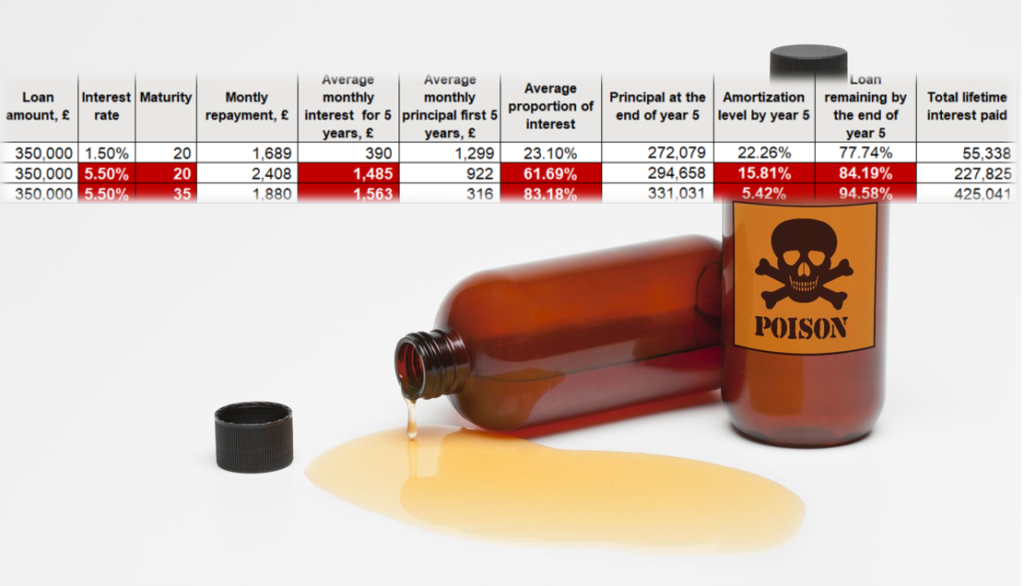
Interest rates: The interest rates are significantly higher now than a year ago when the central bank policy was expansionist. On a given mortgage and given maturity, this is resulting in in interest payments which are 3-4 times higher than before. For the mortgage annuity, this means that you are essentially paying mostly interest in the first year of the mortgage.
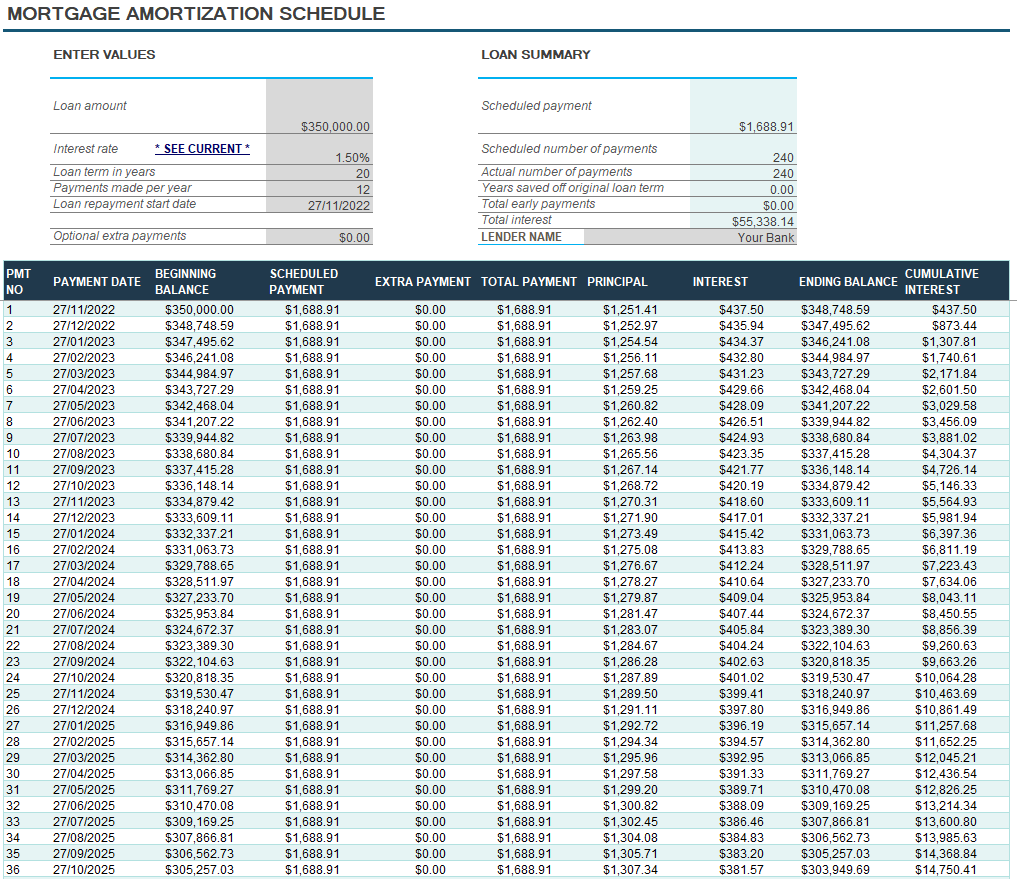
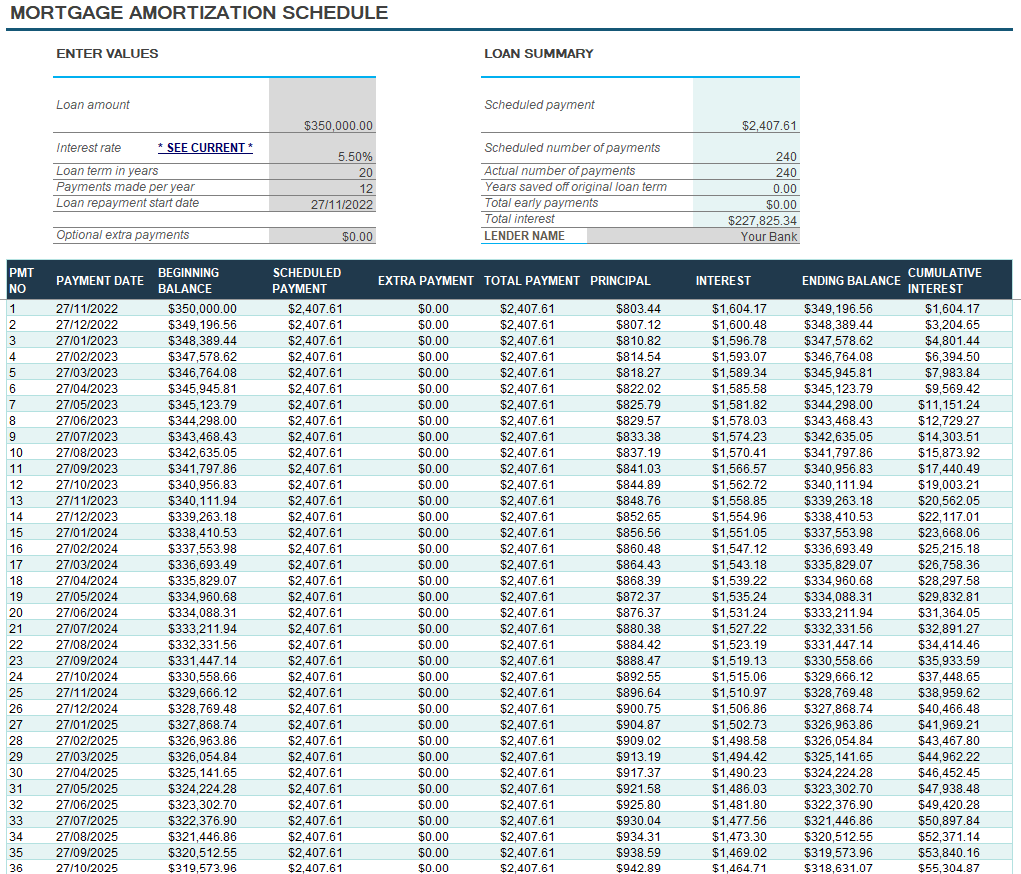
If before the interest rate increase, one could expect a roughly £1,700 standing order for the monthly payments, with only a fourth of it interest and total interest paid at roughly £55,000 for the whole maturity on a £350,000 mortgage, now it is £2,400 monthly payments, with three fourths as in interest payment for the same mortgage.
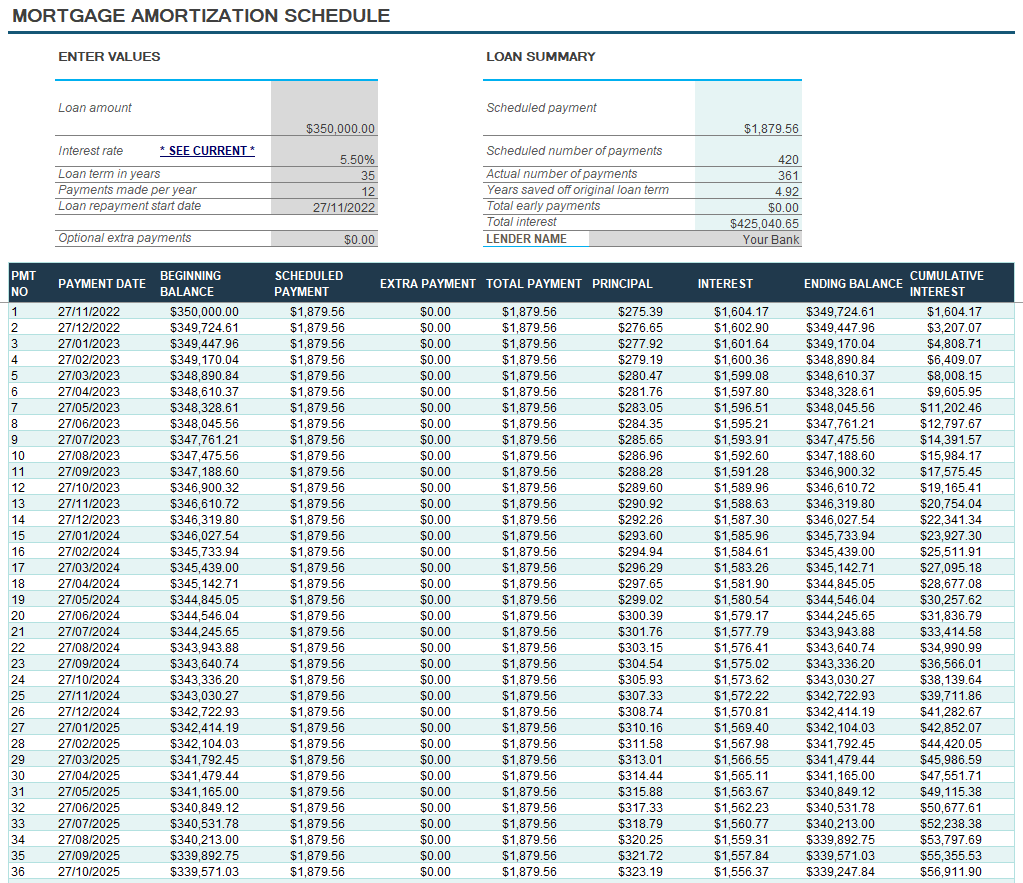
Interest rates: Now, the agents, in a desperate attempt to put a floor under the pressured house prices, are pushing the uninformed buyers also to have longer maturities. This is the simplest recipe for misery, as, in that case, for a similar loan, the interest payments are only about 10% of the total monthly bill.
To reiterate: this means your mortgage effectively does not amortize, and you are trapped in debt for a very long time.
Maturity
So what happens if you also increase the maturity of the loan? Well, it becomes similar to an interest-only loan, a risky product for the borrowers. In this case, the annual amortization of the loan becomes negligible compared to the overall payments.
In numbers. Have a look at the numbers below and think. Does this not look toxic?

What’s next?
Take these schedules when you negotiate for your property deal. Explain to the seller and the agent that the property prices adjusted for a 1.5% mortgage deal cannot hold at the interest rates of 5.5% (or even less). Negotiate a discount that puts you in a comfortable payment category – acceptable monthly payments, shorter maturity, and less leverage.
Not doing that in the current market means financial suicide.
Illustrative schedules are below.