

The current housing price decline is something not many want to speak about. “Cool off”, “Slow down”, and “Even off” are the most common terms used by the agents despite the evident pricing pressures and the decline in sales.
Stock build-up
These mild terms describing “slow-down” would probably be somewhat applicable to the market before August 2022, when a moderate interest rate increase resulted in a significant stock build-up. Now the term “market crash” looks more relevant.
The stock on the Places.je property portal, a leading property advertisement platform in Jersey, by August had doubled as compared to the end of May 2022. As of the time of the writing, the stock on the website exceeded 1090 properties for sale, a peak at least for the last 18 months of our observations. Considering that in 2021, one of the most active years in the Jersey property market, the number of property sales was just above 1660, this indicates an 8-month stock. Considering the current slowdown, however, we think this could now represent a stock for a full year.
However, the real stock available for sale is not fully reflected on internet sources. A significant amount of new-built properties are being marketed through the direct marketing efforts of estate agents (mailing lists) and advertising on social media, meaning the real stock of available property in Jersey exceeds a full year.
Reduced search activity
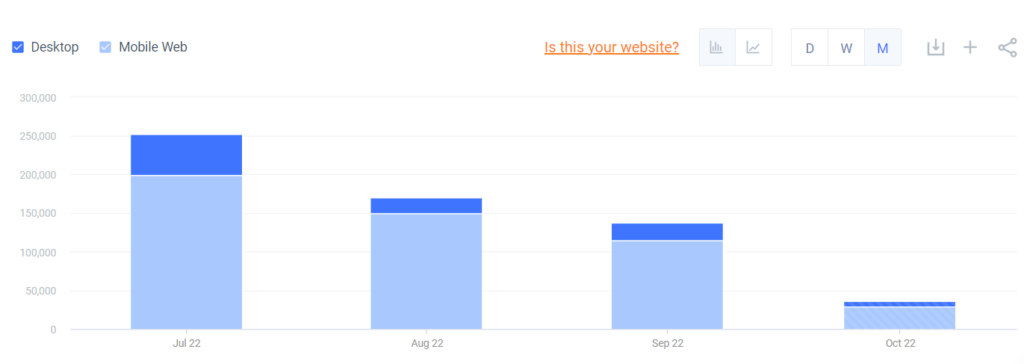
The build-up of the stock was in line with the decline in the estimated traffic to the property websites, indicating significantly diminished activity. According to Similarweb, an independent data analytics platform, the visits to Places.je halved between July and September (from approx 250k visits to less than 130k visits) and the declining trend was evident for the first 13 days of October. Of note, in April and May 2022, the monthly traffic to the website exceeded 450-500k visits.
New price, motivated vendor
Another indicator of the property market activity is the behaviour of the agents. We have observed several behavioural changes and changes in sales tactics.
Firstly, “New price, motivated vendor” has become a dominant selling tactic for many agents. This reflects a wide acknowledgement of the price reduction expectations in the market, something that many were rejecting outward just in Q2 2022.
Application of this tactic in a “creative” fashion, by significantly overpricing the property and then reducing is a separate matter, however, we think that such practices are unsuccessful and overpriced properties promoted on social media are facing backlash. An example of apparently overpriced property receiving backlash on social media is below.
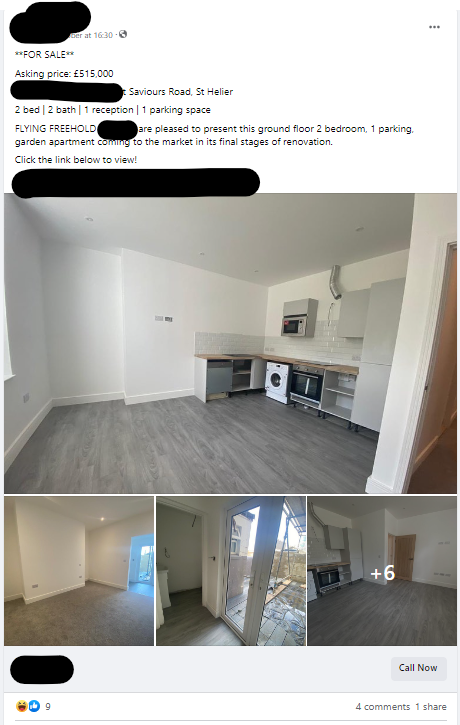
Then in a matter of days, the property’s asking price dropped. The drop amounted to £80,000, evidence of how significant the overpricing had been.
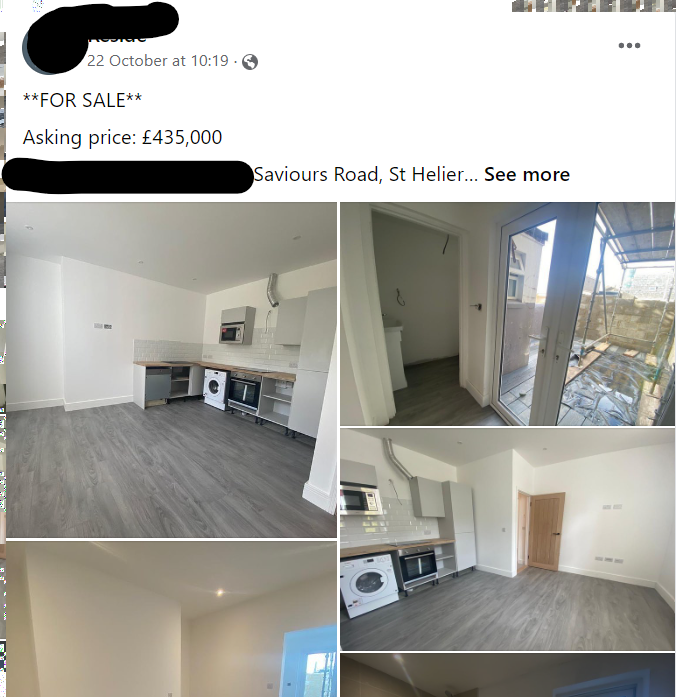
Another recent example of a “motivated vendor” strategy was shown in a social media post of a local real estate agent, which advertised a weekly reduction of the price by £10,000.

Deep discounts
The real estate agents seem willing to “keep” the asking prices high. This is partly caused by their reluctance to frustrate the buyers of the properties just this summer, who paid for Jersey property at historical peak prices while being assured by the agents that “Jersey property prices never go down”.
However, when at the viewing, the agents are willing to go for deep discounts of about 10% of the asking price based on our experience on 2 viewings at the end of September.
On one recent occasion, for a property listed at £465k, we received a call from the agent telling that the seller might be willing to accept £420k. The call from an agent to propose a deep discount on the asking price has not been seen in Jersey for a long time and is a strong indicator of the fear of gaining a foothold in the market.
Turmoil is felt in the new builds sector
The new builds sector is traditionally more resilient, with more people wanting to acquire modern, clean and new properties. However, the property market turmoil caused by the mortgage rates increase has hit the segment too.
According to a recent article at JEP: “The Jersey Development Company is working on a support package to help first-time buyers concerned about losing deposits on apartments they secured years before the recent mortgage rate rise.”
In the same article, the company said: “The situation is unprecedented. We haven’t experienced this turmoil in the property market before in Jersey, with the interest rates rising so dramatically.
We want to support the original purchasers to ensure they can complete on their homes.”
The industry may suffer from a lack of trust for the periods to come
Market ups and downs are not unusual. The coming decline of the market, however, was not a surprise and was subject to discussion in the financial press and within the professional cycles. Despite wanting to transact, many buyers were worried about the upcoming crash. We have been raising these concerns to the property agents we met at least since December 2021 to get the same mantra: “Property prices in Jersey do not go down”.
When the market is in turmoil with a significantly limited number of transactions and strong downward pressure on prices, the trust in real estate agents has been shattered. The market has turned to negative territory just in a matter of weeks. The surprise could have been avoided though if the basic economics was not ignored.
The market decline, despite the outward assurances of the property agents that the property prices will only go up or stay flat, is likely to result in diminished trust, which will haunt the industry for periods to come. The buyers are increasingly likely to challenge the valuations in the future.
Will lessons be learnt?
The last 18 months in the Jersey property market were those of greed and fear. Rampant and irresponsible pricing practices, lax lending criteria and cheap money contributed to an overpriced market with many of the characteristics of a market bubble.
However, the era of cheap money is gone, and Jersey, the UK and world economies are facing a sustained slowdown. The property markets will not be defying gravity.
A period of reflection should proceed, and lessons have to be learnt. Lessons in valuation, financial discipline, ethics and common sense are among them.


