

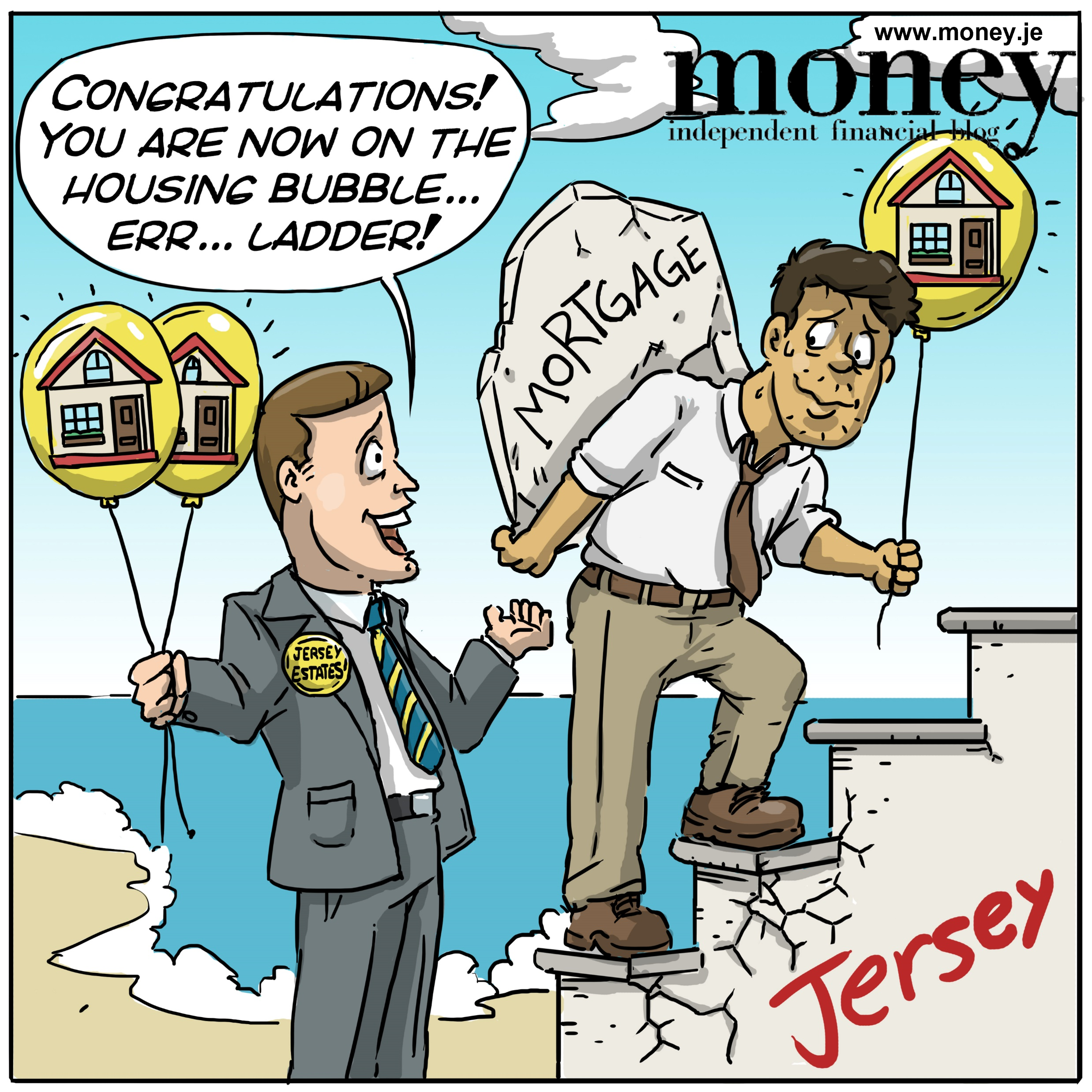
High prices bring high debt, and Jersey house prices had several jumps during the past two years. So did the debt.
The following line chart with the average house prices from Statistics Jersey just begs for a decline. The housing market, which had a significant decline and stagnation period of more than 5 years between 2011 and 2016, cannot only go up.
But when the prices go down and stagnate with the owners under a high debt burden comes financial distress: they struggle to repay, and when they sell, they are likely to lose. It seems like common sense, but it took Jersey a mortgage shock to realize that it all went too far and too fast.

Now, when the interest rates have naturally put pressure on the prices and cash flows, as the JEP reports, many borrowers are under extreme financial pressure. The mortgage rates have increased, and the property market is bloated with illiquid assets. The situation must be difficult for many.
Following the BoE base rate rise, which is the highest since 2008, which we wrote about and which we think is insufficient to tame the inflation, Jersey Housing Minister David Warr urged lenders to show ‘compassion’ to Islanders who default on their mortgages.
But what is the root cause of the issue? Could the root cause of the financial distress be in the overpriced and essentially unaffordable property market at each point in time historically, with the transactions fuelled only by excess credit and irresponsible market practices? Let’s think about it. How many more people are at high risk of being distressed?
And in this context, is showing ‘compassion’ the right thing to do, or will it fuel further irresponsible behaviour by the property agency industry, the lenders and the borrowers?
This is supply and demand, baby.
Our readers have described situations (and we had such experiences, too) in which responsible and well-established professionals with (previously) large deposits were not able to afford the accommodation they needed as a result of the house price bubble.
The concerns about the ballooning prices landed on deaf ears with the narrative pumped by the real estate agencies that this is due to the “demand and supply” and hence, supposedly natural.
But were these “demand and supply,” specifically the demand, natural? Likely not. There were groups of businesses with a vested interest in fueling the price bubble, and there was the right environment to do so.
Who warmed their hands on the property bubble?
Several players contributed to the uncontrolled and irresponsible behaviour in the property market.
The banks
With the entry of Santander International and its drive to grow the mortgage portfolio, the competition in the mortgage market intensified. Before the CV-19-induced decline in mortgage rates, the banks were already neck-to-neck in growing the portfolio with the introduction of 5% deposit and up to 5-6x gross salary lending. After the CV-19, the playing field widened as the market saw the entry of buyers who could not previously afford the mortgages.
Large estate owners
We are aware of some considerable property portfolio owners adjusting their prices up in a matter of weeks at significant rates purely to benefit from the mortgage rush. The last large increase in the pricing of their properties took place in the period of May to July 2022, just to the run-up to the first significant increase in the interest rates when people were trying to “lock in rates”.
Estate agents
The estate agents are vested in high property prices due to their fee structure (% from the sales price). The irresponsible marketing techniques stoking fear of missing out, aggressive salesforce, developed sales infrastructure, and poor independent property pricing information and statistics helped them dictate the property market narrative around the “never falling prices”. Low mortgage rates provided a fertile ground for such practices.
Irresponsible borrowing
Driven by the cliche to “step onto the property ladder” carefully cultivated by the industry and motivated by the historically low-interest rates large number of people rushed into the property market. This resulted in a temporary disbalance and provided necessary conditions for unfair pricing of the properties.
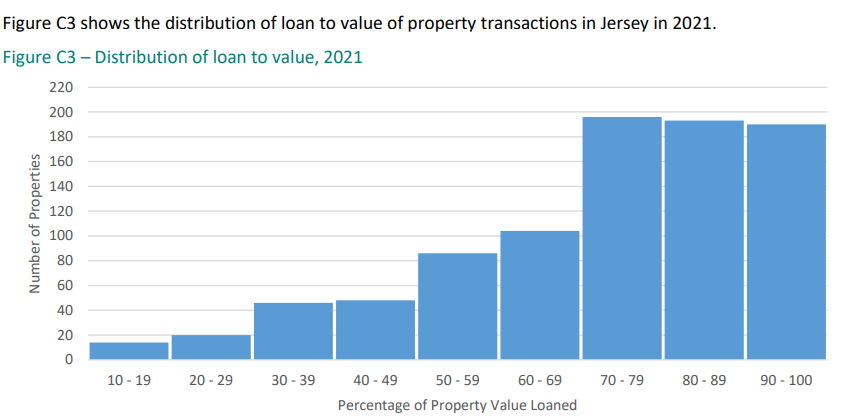
The diagram shows it clearly: the vast majority of Jersey Mortgages were above 70% LTV, almost equally split between 70-79%, 80-89% and 90-95% ranges.
Back to the compassion
Compassion is good. But if compassion means a massive bailout effort for the industry, it will turn ugly. After all, the irresponsible and, in many cases, reckless behaviour of the industry players was, among other things, based on their confidence that the market would be bailed out when the card house collapsed.
Selective support to the people is important. But a blanked “irresponsibility bonus” for anyone impacted by the mortgage repricing would send wrong messages to the market.
It would also be frustrating for those who were outpriced from the market by irresponsible lending, selling and borrowing if they have to now bail the industry out with their taxes.
Above all, however, is a need for policy change. The players in the market should not be allowed to blow a bubble by acting irresponsibly and, in many cases – outward rampantly.


